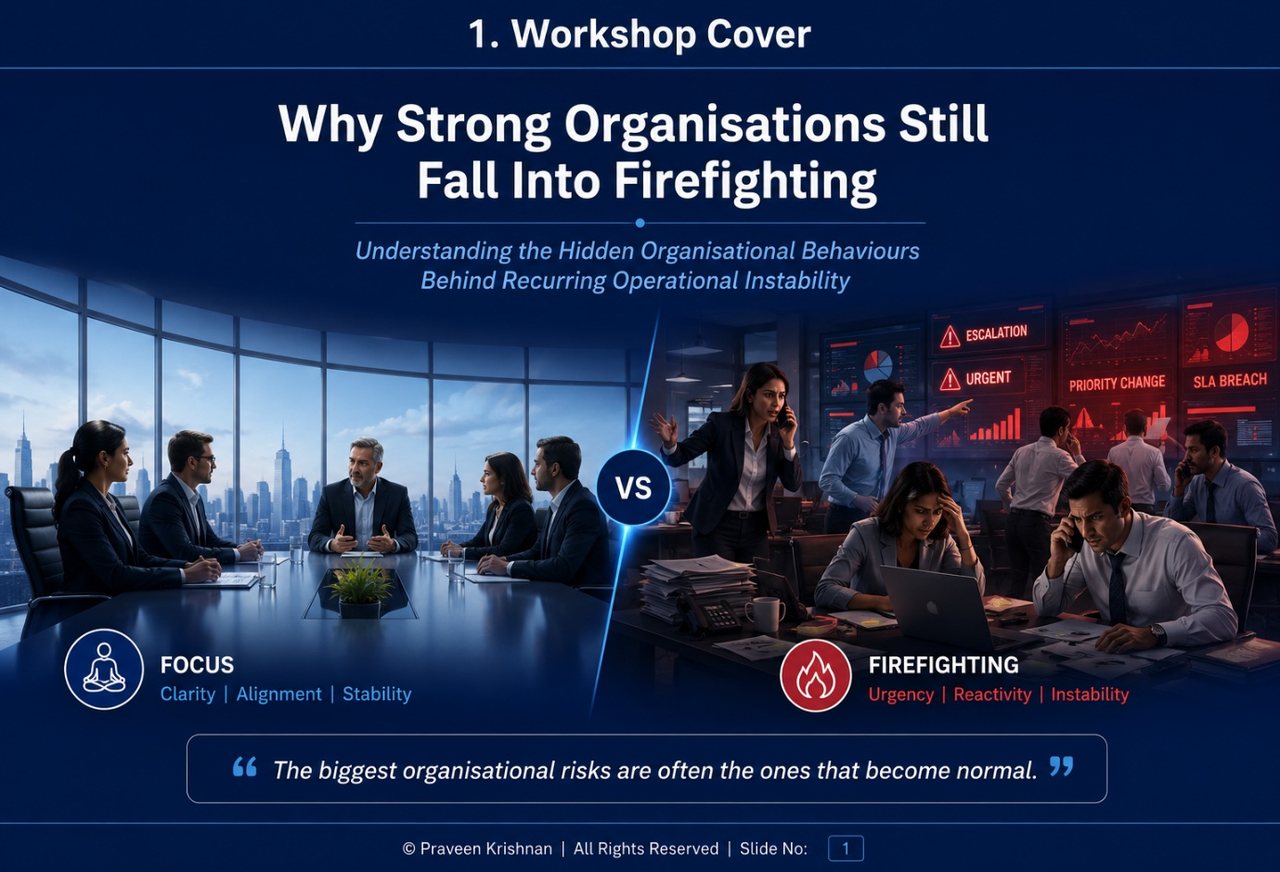
Why Strong Organisations Still Fall Into Firefighting
Understanding the Hidden Organisational Behaviours Behind Recurring Operational Instability
Can also be customised as a 90-minute Executive Insight Session.
Executive Challenge
Many organisations employ experienced leaders, invest in technology, implement management systems, monitor KPIs, and continuously improve their processes. Yet they continue to experience recurring firefighting, operational instability, increasing escalations, inconsistent decisions, and constant pressure on people.
Firefighting is rarely the root problem. It is often the visible symptom of deeper organisational conditions that quietly shape behaviours, decisions, and performance. This workshop challenges conventional thinking by helping leaders recognise why capable organisations repeatedly become reactive despite their best improvement efforts.
Workshop Description
Recurring firefighting is often accepted as part of normal business operations. Delays, customer escalations, overtime, repeated operational issues, and urgent management interventions gradually become everyday realities. Over time, organisations become highly effective at responding to problems but less effective at preventing them.
This interactive Executive Insight Workshop explores why firefighting persists despite experienced leadership, structured processes, and continuous improvement initiatives. Participants will examine the hidden organisational behaviours, leadership decisions, and systemic conditions that quietly contribute to recurring instability.
Through executive insights, facilitated discussions, practical business examples, and leadership reflection, the workshop encourages participants to move beyond symptoms and begin asking more meaningful organisational questions. Rather than introducing another improvement methodology, the session challenges leaders to view operational instability through a broader organisational systems perspective, creating greater awareness of the conditions that influence sustainable performance.
Key Learning Outcomes
Participants will be able to:
Workshop Structure
Recognising Firefighting
Challenging Conventional Thinking
The Hidden Role of Pressure and Organisational Behaviour
From Firefighting to Sustainable Stability
Workshop Methodology
Participants engage through:
Target Participants
Ideal Organisations
Suitable for organisations across:
Participant Takeaways
Participants will leave with:
Why This Workshop Is Different
Unlike conventional workshops that focus on problem-solving tools or improvement methodologies, this session explores the organisational conditions that quietly create recurring firefighting. Rather than prescribing immediate solutions, it encourages leadership teams to question long-held assumptions, recognise hidden behavioural patterns, and understand why many improvement initiatives fail to create lasting operational stability. Participants leave with a different way of seeing their organisation — one that shifts the focus from reacting to problems towards understanding the conditions that continually recreate them.
Facilitator Profile
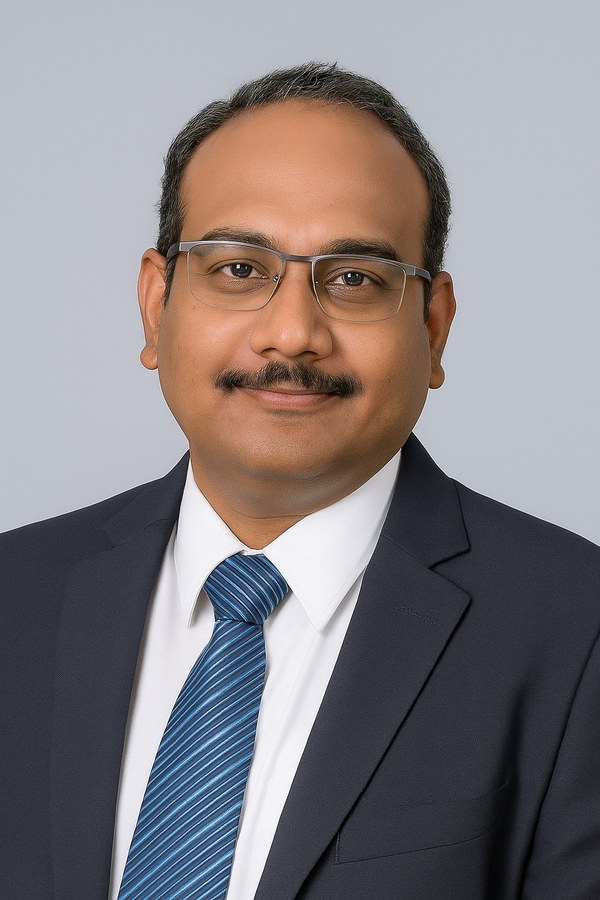
Praveen Krishnan
A Business Transformation and Operational Excellence professional with over 22 years of experience in the Logistics, Supply Chain, Freight Forwarding, and Warehousing industry.
His expertise spans ISO Management Systems (development, implementation, internal auditing, certification readiness, and continual improvement), Lean Six Sigma Black Belt, Business Intelligence systems for executive decision-making, and the development and implementation of SME Risk Management Systems.
He is the Founder of SSHV™ Consulting, where he partners with leadership teams to improve organisational clarity, predictability, and control by identifying hidden organisational conditions that influence operational performance, leadership decision-making, and long-term business outcomes.
Workshop Format
Available as:
Bring This Workshop to Your Leadership Team
Book this complimentary Executive Insight Workshop, or call to discuss a customised in-company programme.